
Food chains in Wild West Pioneers
Your first meals come from the wild: mushrooms gathered in the forest and game your hunters bring in, turned into soup and sausages. Nothing is eaten where it is made, though. Every bite has to be carried to a shop before a settler can have it, so a working food supply is three or four buildings in range of each other, not one. Grain fields and cattle come later.
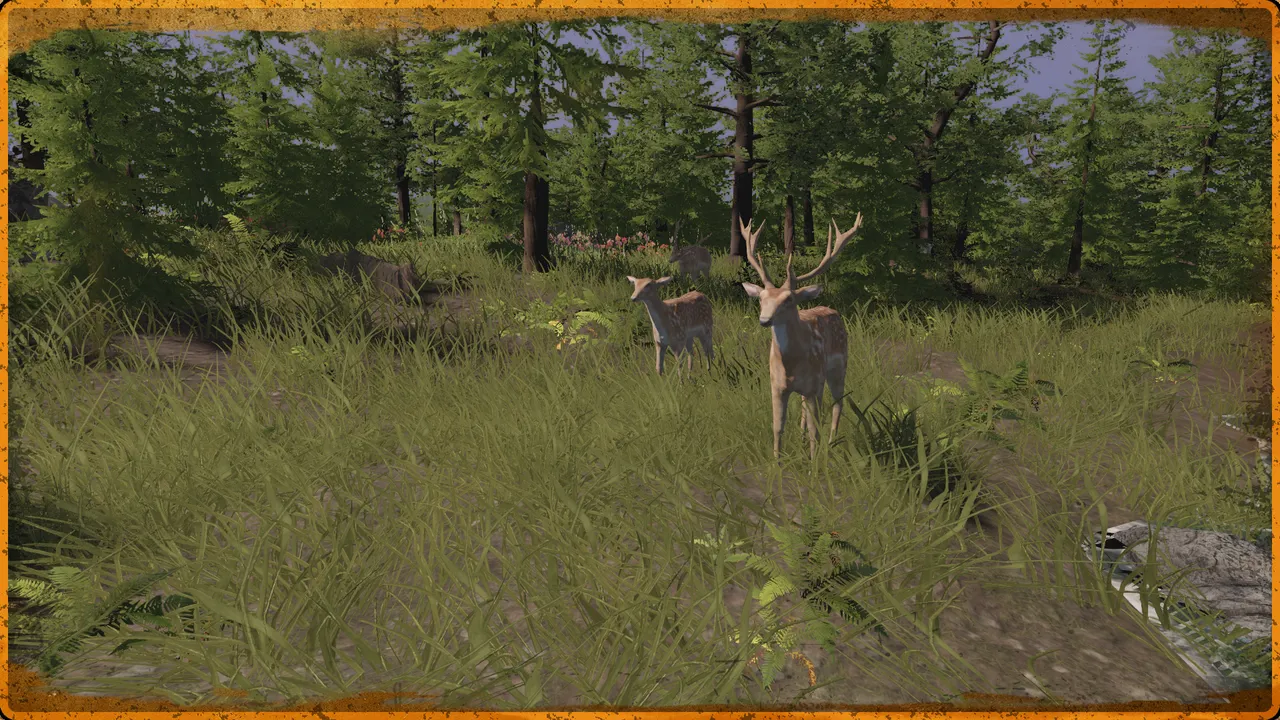
What do settlers eat first?
The team’s own answer: “Mushrooms gathered from nearby forests and hunted game can provide the first reliable meals. Soup and sausages are not a bad start at all!” The team also warns that “a growing town needs variety to stay fed”, so plan on running both paths rather than one.
| Path | Where it starts | What it becomes | Buildings involved |
|---|---|---|---|
| Gathering | Mushrooms in the forest near town | Soup | A gatherer’s hut, then the kitchen. |
| Hunting | Deer in a green wildlife area | Sausages | Hunter’s Cabin, then the Butcher |
How does meat get from a deer to a settler?
The hunting chain runs in four steps:
- Hunt Hunters work from a cabin near game and bring in raw meat.
- Butcher “Meat comes in, tasty sausages come out.”
- Warehouse Its workers carry goods between buildings. The Hunter’s Cabin and the butcher both need to sit inside a warehouse’s range.
- Shop In the game this is the food shop. Only food that reaches it gets eaten.
The team adds that “hunters and butchers need tools and supplies, too”, which is why a food chain stalls when a different chain upstream of it does.
Where should the Hunter’s Cabin go?
On the edge of the green wildlife zone, never inside it. This is the mistake that empties a hunting ground for good. The publisher’s warning:
“If you put a Hunter’s Cabin inside a wildlife area, the deer will disappear and won’t come back. To avoid this, place the Hunter’s Cabin as close as you can to the edge of the green zone.”
If your only wildlife area is already spent, the publisher gives a way out: build a Hunter’s Cabin beside another wildlife area, put a warehouse next to it, and connect that warehouse to your Town Hall. That only works when a second area is close enough. A playtest update also reworked where rocks, mushrooms and wild game sit in both settlements, so spots you saw in older videos may not match.
Why are settlers starving when the storehouse is full?
Usually the shop, not the food. The food shop has to be in range of the houses and in range of a warehouse, and in the demo the publisher added that “The food shop delivers meal to the settlers once per day”, so on normal speed a new shop takes a while to show up as fed homes. Food is only one of the basic needs; water and shelter come with it, covered in the first two hours and residents’ needs and whims.
What comes after mushrooms and game?
Farming. “Farming grain in nearby fields and raising cattle in pastures help ensure that your settlers will not go hungry.” The second tier of the idea tree lists grain farms, a corn farm, a windmill, a bakery, a cattle ranch, a slaughter house and the butcher (this may have changed in later updates). Those unlocks are paid for with journey points, explained on the journey points page. Pick a farm’s spot carefully: once its fields are placed it cannot be moved, as moving and demolishing explains. Field counts, upgrades and a full potato farm’s daily yield are on farms and ranches.
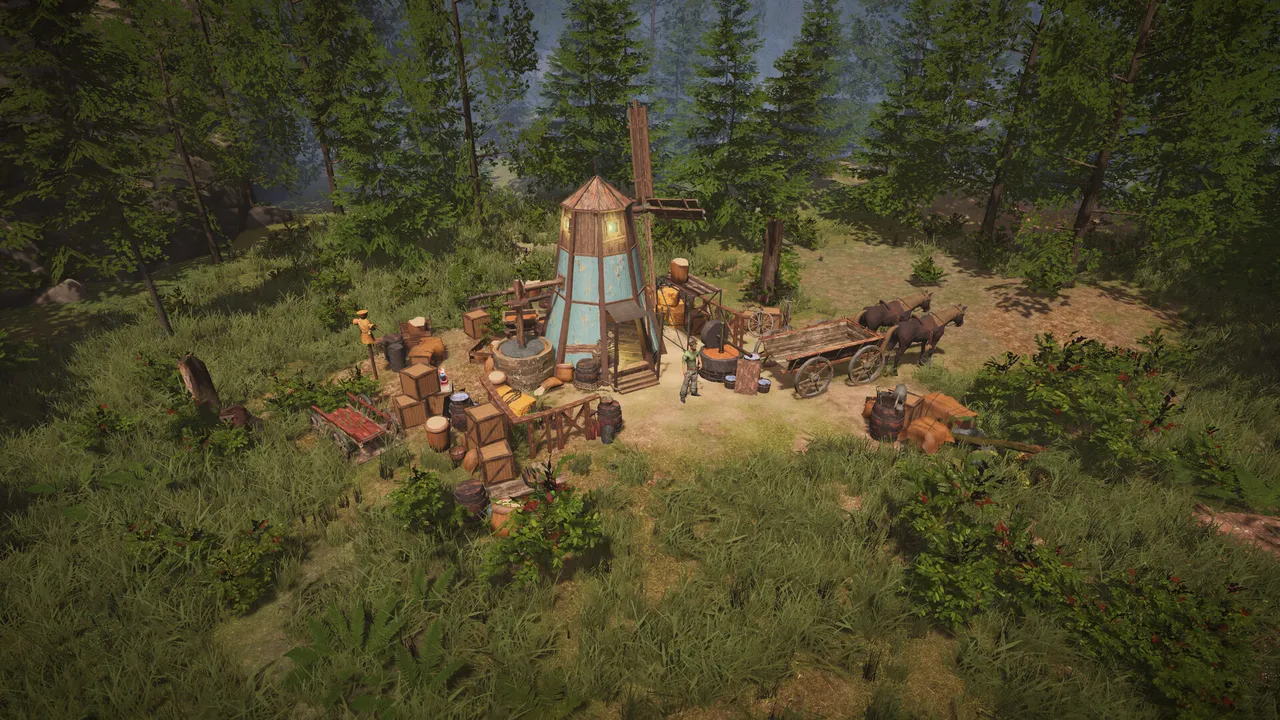
Drink is its own chain. Moonshine needs “a supply of potatoes, grain, and water”, and later residents want bourbon instead.
Why does the early food chain feel so slow?
Playtesters said the same thing. “Plenty of you told us the early hours dragged, and the loggers-to-kitchen production chain came up again and again.” The answer for Early Access was to cut the cost of every building you can place in your first two hours, with journey point and tech tree costs adjusted to match.
Food building costs and numbers
Costs and rates for the early food buildings. The kitchen, butcher and Hunter’s Cabin figures may differ in your game.
| What | Number |
|---|---|
| Gatherer’s hut | 10 logs; 50 journey points to unlock |
| Food shop | 20 logs; 50 journey points, after the kitchen |
| Kitchen | Uses 5 per hour |
| Soup demand | 30 food units a day for a town of six tents |
| Hunter’s Cabin | Needs the carpenter’s workshop first |
Related
- Your first two hours, where food is the first real test.
- Scouts and expeditions, which run on canned goods.
- Gold and the debt, the other early pressure on your workers.